The first question anyone asks a custom home builder is the one nobody wants to answer directly: what will it cost? We will answer it. In 2026, most true custom homes in Middle Tennessee — Davidson, Sumner, Robertson, Williamson, Wilson and Rutherford counties — cost roughly $200 to $350 per square foot to build, not counting the land. A 3,000-square-foot home therefore lands somewhere between $600,000 and $1,050,000 for construction, and it is easy to go past that with a difficult site or premium finishes. The rest of this guide explains where that spread comes from, so you can decide where your money should go.
Price per square foot is a starting point, not a quote
Builders quote per-foot numbers because homeowners ask for them, but two 3,000-square-foot homes can differ by $300,000. Square footage does not capture how many corners the roof has, whether the lot is flat, how much of the house is kitchen and bath, or whether the exterior is vinyl or full brick and stone. Treat the per-foot range as a way to check whether a plan and a budget belong in the same conversation. The real number comes from a line-item estimate on a specific plan on a specific lot, which is what we provide for free.
The seven things that move the number most
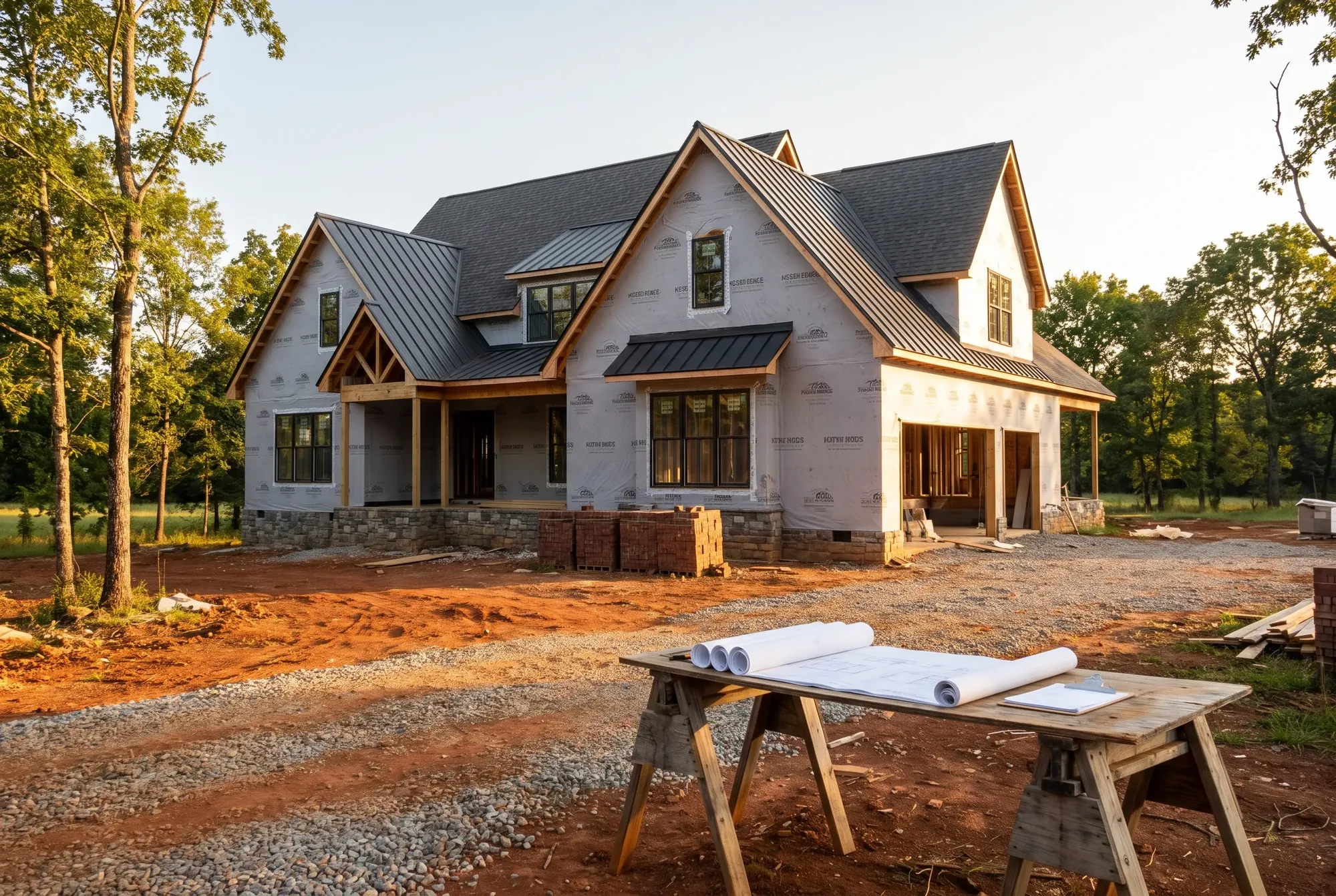
- The site. Grading, rock excavation, a long driveway, a septic system instead of sewer, a well, and bringing power a quarter mile up a hill can add $30,000 to $100,000 before a footing is poured. Sumner and Robertson County acreage is often on rock; Williamson County hillsides need engineered foundations.
- The shape of the house. A simple rectangle with a straightforward roof is the cheapest square footage you can build. Every jog in the foundation, every gable, dormer and valley adds framing, roofing and flashing labor.
- Kitchens and bathrooms. They are the most expensive rooms per foot by a wide margin — cabinetry, stone, tile, plumbing fixtures and appliances. A house with four full baths and a butler’s pantry costs more than the same footage with two baths.
- The exterior. Full brick and stone costs several times what fiber cement siding does; standing-seam metal roofing costs two to three times architectural shingles.
- Windows and doors. Black aluminum-clad or steel windows, oversized sliders and a real front door can be a five-figure line by themselves.
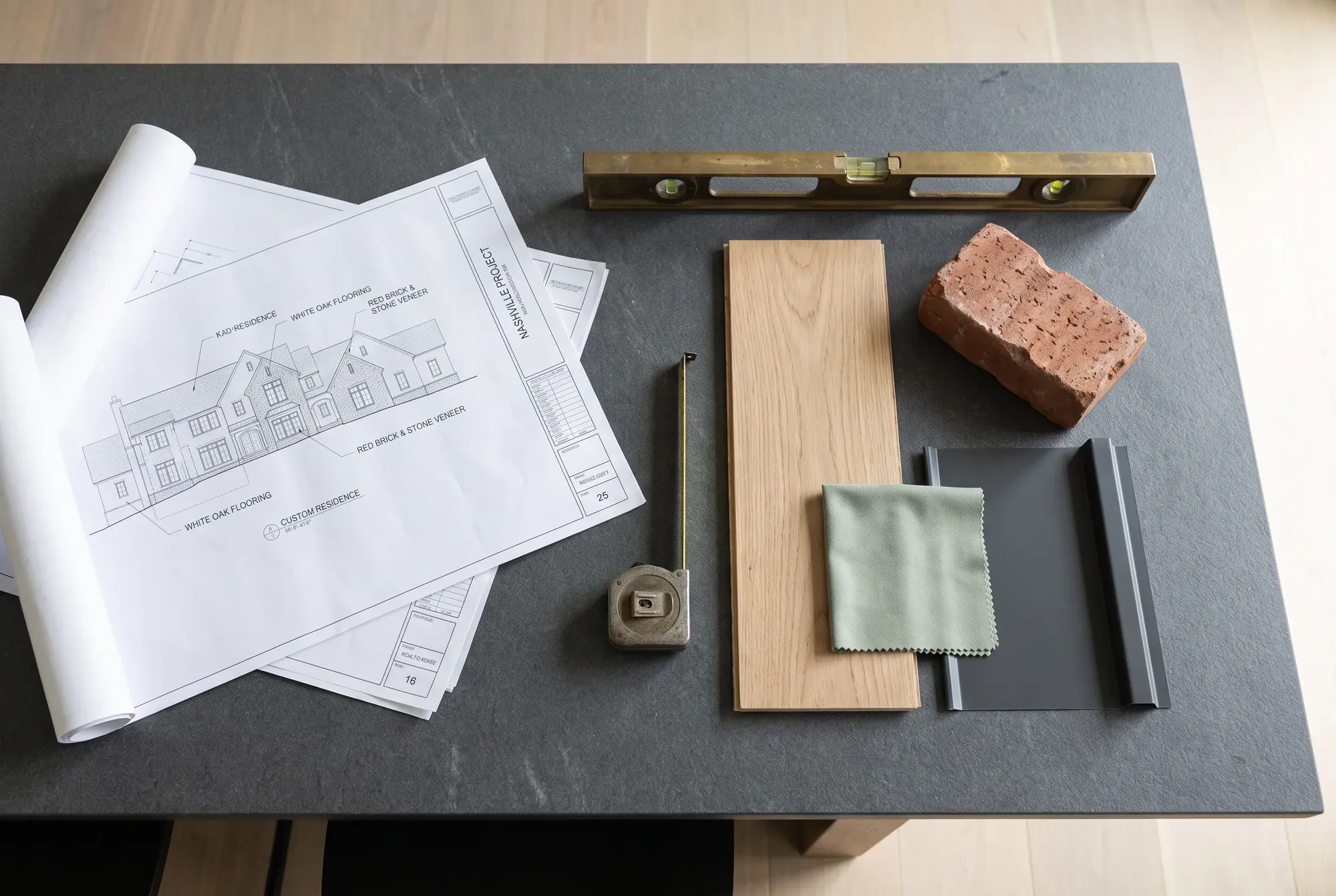
- Finish level. Site-finished white oak floors, custom trim, built-ins, designer lighting and plumbing fixtures are where a “nice” house becomes a luxury one, and where the budget most often drifts.
- Outdoor living. Covered porches, outdoor kitchens and fireplaces are part of nearly every custom home we build in Tennessee and belong in the budget from the start, not as an afterthought.
“He kept us updated throughout the process and was always quick to answer questions.”
What a realistic budget looks like
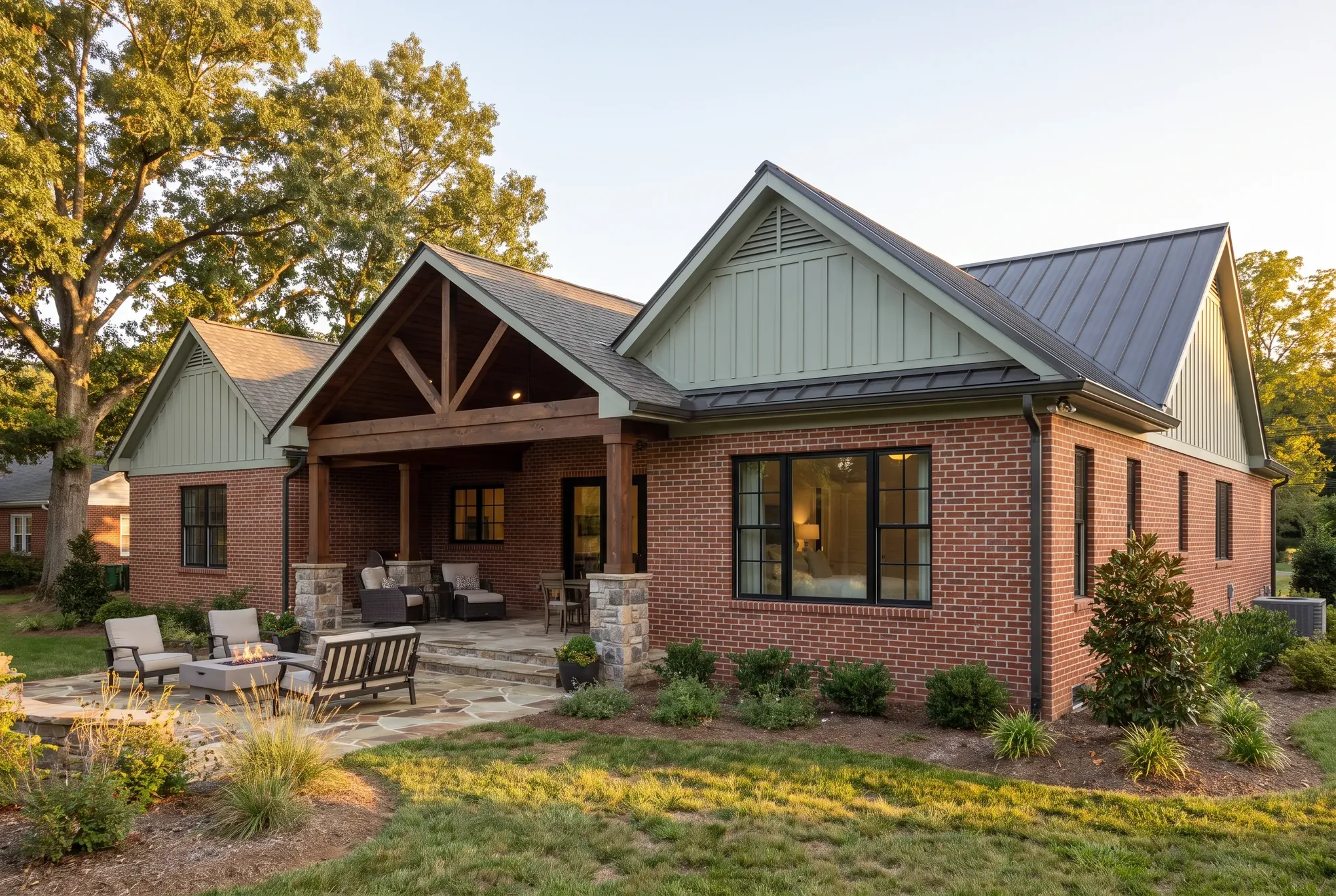
For a 2,800-square-foot modern farmhouse on a two-acre lot north of Nashville, with a covered porch, a metal roof over the porch and shingles over the house, board-and-batten fiber cement siding, quartz counters and a mid-to-high finish level, a 2026 construction budget in the $700,000 to $850,000 range is realistic, plus the land. A full-brick traditional home of the same size in Williamson County with premium windows, a stone fireplace and site-finished hardwoods would sit closer to $950,000 to $1,150,000. These are not quotes; they are the neighborhood the conversation starts in.
| Budget line | Typical share |
|---|---|
| Site work, foundation and utilities | 8–15% |
| Framing, roofing and exterior | 25–30% |
| Windows and doors | 5–8% |
| Plumbing, electrical and HVAC | 12–15% |
| Interior finishes (drywall, trim, paint, floors) | 12–15% |
| Kitchens and baths (cabinets, stone, tile, fixtures) | 12–18% |
| Permits, engineering, contingency and fee | 8–12% |
Costs people forget
- Land and closing costs, plus a survey and a soil evaluation before you close.
- Design and engineering — plans, structural stamps and any HOA architectural review.
- Construction loan interest during the build, typically eight to fourteen months.
- Landscaping, fencing and the driveway’s final surface, which are often excluded from a builder’s base price.
- Appliances, window coverings and furniture for a house that is now considerably larger.
- A contingency of 5 to 10 percent for the decisions you will make once you can walk the rooms.
How to keep a custom home on budget
Decide the finish level before the plans are drawn, not after. Spend on the things that are hard to change later — the site, the structure, the windows, the kitchen layout — and be willing to phase the things that are easy to add, like the pool house or the fourth bathroom’s tile upgrade. Choose a builder who prices line by line and shows you the allowances, so a change is a decision you make rather than a surprise on a draw request. And build a covered porch: in Tennessee it is the best-used square footage in the house.
When you are ready to put real numbers to a real plan, our custom home page explains how we work, and a site visit and written estimate are free.