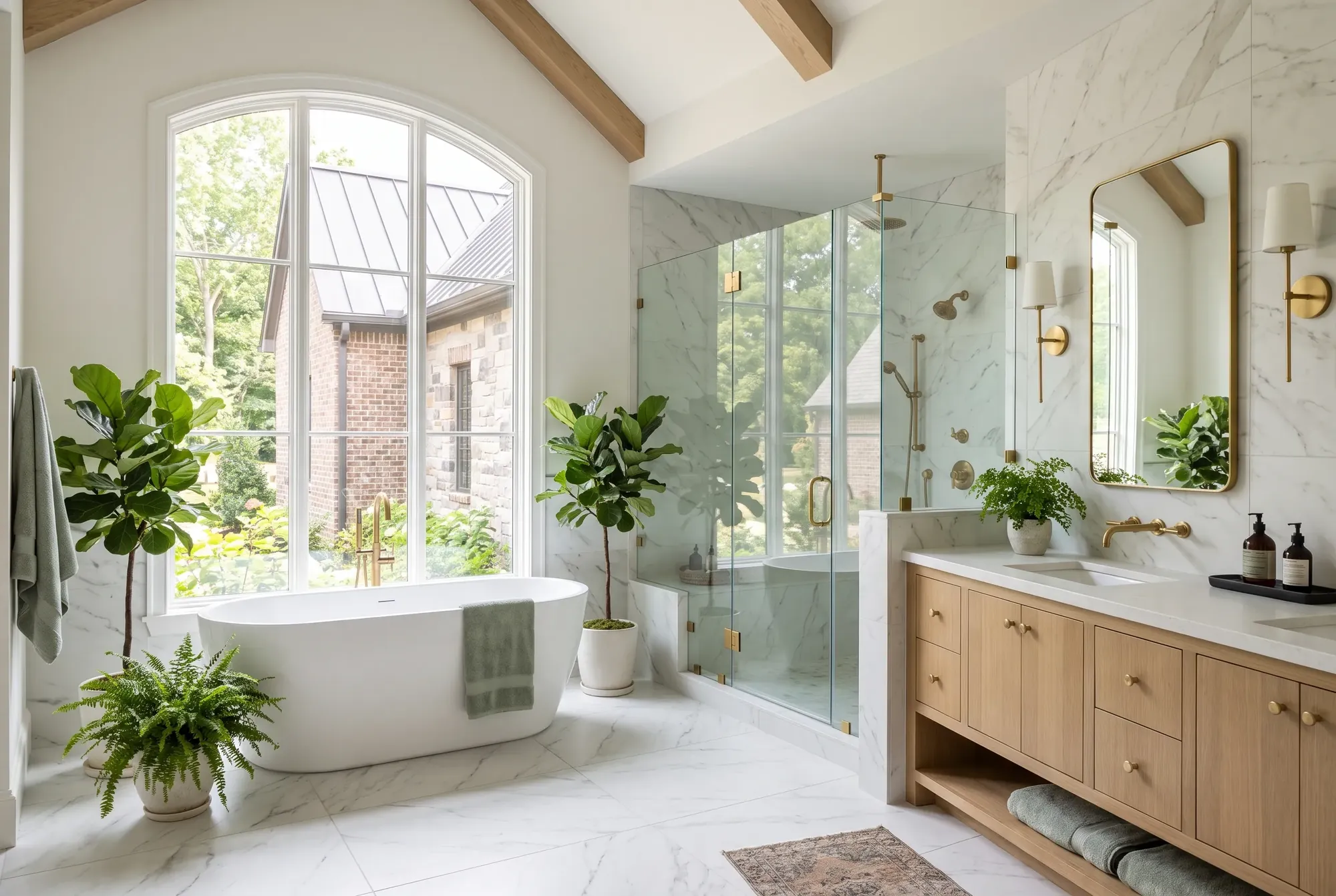
Bathrooms are the smallest rooms with the most trades in them, and that is why their budgets surprise people. The ranges we see in Middle Tennessee in 2026: a hall or guest bathroom remodeled in its existing footprint costs $18,000 to $35,000; a primary bathroom with a new layout, a large tiled walk-in shower, a freestanding tub, custom double vanity and stone counters costs $45,000 to $85,000, with heated floors, steam and premium tile taking it higher. This guide covers where those numbers come from, how long the work takes, when you need a permit, and — most important — the details that keep a new bathroom from leaking in year three.
What drives the cost of a bathroom remodel
- Tile. Both the material and the labor. A large-format porcelain floor and simple wall tile is the economical end; marble mosaics, herringbone patterns, niches and full-height walls add days of labor.
- Plumbing changes. Keeping the toilet, shower and vanity where they are saves thousands. Moving the drain for a curbless shower or relocating the toilet means opening the floor or the ceiling below.
- Glass. A frameless glass enclosure for a large shower is a $2,500 to $6,000 line by itself.
- Fixtures and the vanity. A custom vanity with a stone top and quality faucets, a thermostatic shower system and a freestanding tub filler are where a “nice” bath becomes a luxury one.
- Extras. Heated floors, a steam generator, a linear drain, a water closet with a pocket door, and a makeup vanity each add to the total.
Tub-to-shower conversions
The most common single bathroom project we do is replacing a tub with a walk-in shower — usually $12,000 to $25,000 when the plumbing stays roughly where it was, depending on tile and glass. Keep at least one tub in the house for resale if you have children or plan to sell; for a primary bath, a big shower and a freestanding tub together are what buyers expect at the top of the market.
“The estimate was fair and they worked around weather conditions to finish on time.”
The waterproofing that decides everything
Most shower failures come from what is behind the tile, not the tile. A bathroom that lasts has a continuous waterproofing membrane — sheet or liquid-applied — over the whole wet area, a shower pan sloped to the drain and tied into it properly, a flood test before tile goes on, and an inspection before it is covered. Ask any contractor to describe their waterproofing system before you sign; if the answer is “cement board and tile,” keep looking. Ours is a membrane system, flood-tested, on every shower.
How long a bathroom remodel takes
Three to five weeks for a bathroom remodeled in its footprint, five to eight weeks when walls, plumbing or windows move. The sequence is demolition, rough plumbing and electrical, inspection, waterproofing and flood test, tile, vanity and counters, glass measurement, fixtures, then glass installation about a week later. You can stay in the house; we keep a second bathroom working and seal the work area with dust barriers.
Permits, and what a bathroom remodel returns
Moving plumbing, adding circuits or changing walls requires a permit and inspections in Metro Nashville and the surrounding counties; swapping fixtures in place does not. On value, an updated primary bath is one of the strongest resale signals in the Nashville market, and a bathroom that has been done properly — permitted, waterproofed, inspected — is worth more than one that merely looks new. Our bathroom remodeling page shows what we build; estimates are free.